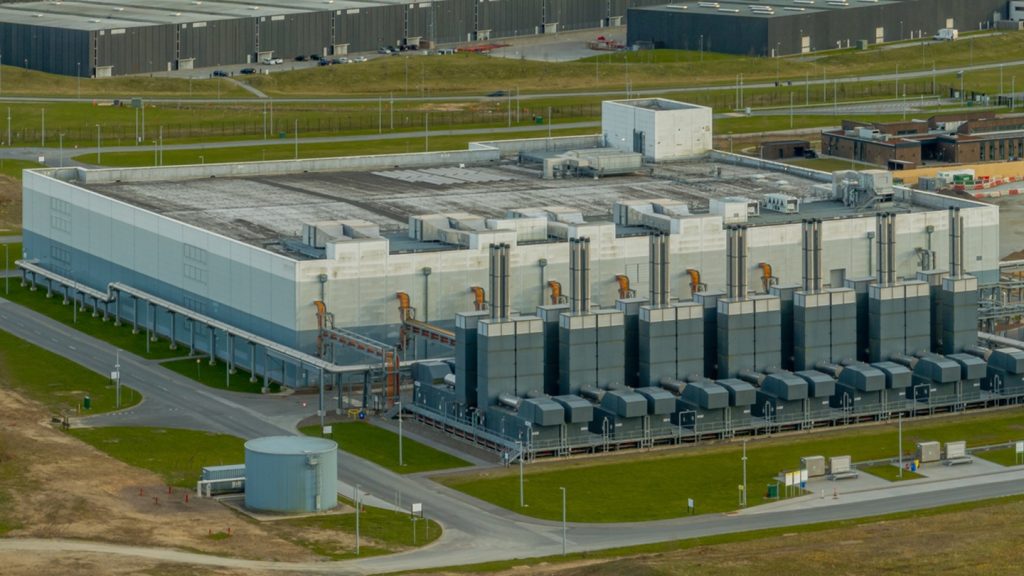

Duke Energy has finalised an agreement requiring data centre developers in North Carolina to fund power grid connections upfront, preventing existing ratepayer bills from covering the infrastructure required for major digital facilities.
The settlement, which has been submitted to the North Carolina Utilities Commission, establishes mandatory financial measures to insulate current electricity consumers from the capital expenditure involved in connecting large-scale operations.

Access deeper industry intelligence
Experience unmatched clarity with a single platform that combines unique data, AI, and human expertise.
The consensus was negotiated between the company’s regional subsidiaries, Duke Energy Carolinas and Duke Energy Progress, and the North Carolina Public Staff, which represents utility consumer interests.
Several prominent data centre operators and stakeholders also signed the agreement, including Microsoft, Google, Meta, Amazon, the Carolina Industrial Group for Fair Utility Rates, and the US Department of Defense.
Under the agreed terms, new data centres and other large-load operations must provide non-refundable upfront payments for dedicated electrical facilities, such as bespoke substations needed to tie into the power network.
Developers will also be obligated to supply advance deposits and security guarantees for shared transmission lines and broader system improvements, while purchasing electricity through a dedicated High Load Factor rate structure.
Duke Energy North Carolina president Kendal Bowman said: “It’s simple – data centres will pay upfront for all costs to connect to the grid.
“We’re shielding other customers from these costs in a way that protects reliability and ensures everyone benefits from the economic growth coming to North Carolina.”
Pending commission approval, expected by mid-November, the framework will apply to data centres and other commercial loads of 50MW or higher with an 80% load factor executing an electric service agreement after 1 June 2026.
Duke Energy had earlier mandated similar contractual terms for developments demanding at least 100MW, with existing contracts signed prior to June maintaining equivalent protections.
The pact expands on customer protections introduced in 2024 and Duke Energy’s Customer Protection Plus framework announced in July, which outlined how data centre growth would produce billions of dollars in savings for existing ratepayers.
Duke Energy Carolinas provides electricity to approximately 2.3 million accounts across central and western North Carolina, while Duke Energy Progress supplies 1.6 million customers in the central, eastern, and Asheville regions, ahead of a planned consolidation into a single utility on 1 January 2027.