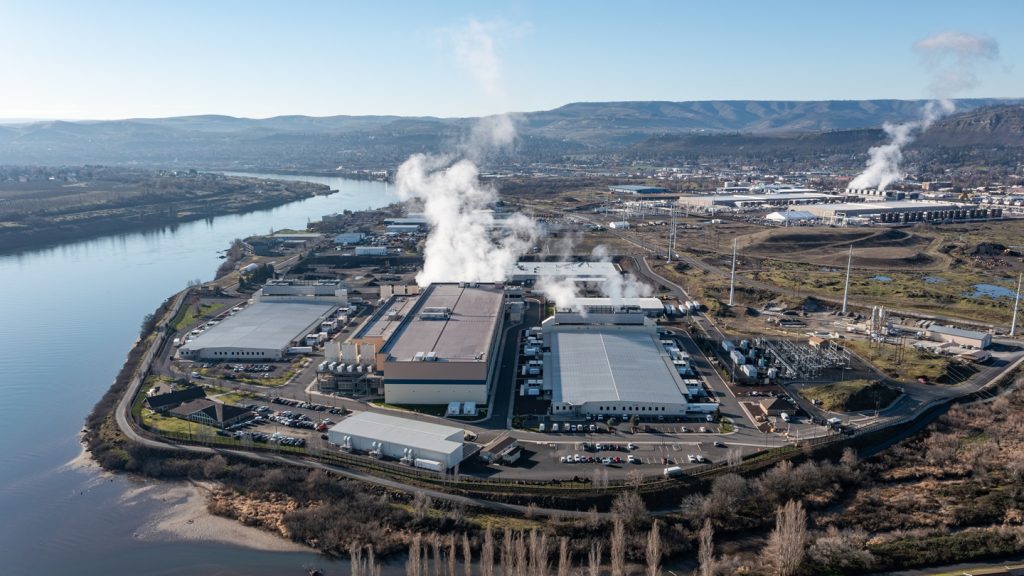

Solaria has entered into an agreement with the Government of Uruguay to establish a $5.7bn data centre technology campus with a capacity of up to 500MW.
The site will operate under the country’s Free Trade Zone regime and will be paired with up to 350MW of solar photovoltaic power generation capacity.

Access deeper industry intelligence
Experience unmatched clarity with a single platform that combines unique data, AI, and human expertise.
The announcement follows the company’s financial update for the first half of 2026, reported in September 2026, when net profit rose 52% year-on-year to €125m ($140.1m).
Solaria attributed the earnings increase to the commissioning of new capacity alongside growth in its electrical infrastructure business for data centres.
The data centre development will proceed in two separate stages. An initial phase will establish 200MW of data centre capacity, followed by another 300MW.
Initially targeted at cloud services, the campus will combine water-efficient cooling technology, using closed-loop systems or equivalent methods to restrict water consumption.
Under the framework, Solaria will construct and operate the Free Trade Zone, providing infrastructure, land, and operational services to major data centre operators.
The company will also build the transmission infrastructure required to link the technology campus directly to Uruguay’s 500kV transmission grid.
Electricity demand from the campus and solar generation capacity will expand in a coordinated manner.
State-owned utility Administración Nacional de Usinas y Trasmisiones Eléctricas (UTE) participated in the deal and will provide land for one or two solar photovoltaic plants supplying the planned 350MW capacity.
UTE will buy the generated electricity under an envisaged Power Purchase Agreement spanning up to 40 years.
Uruguayan President Yamandú Orsi and Solaria CEO Arturo Díaz-Tejeiro signed the agreement alongside UTE.
The project expands Solaria’s commercial focus into developing and managing technology campuses and Free Trade Zones.
This integrated structure merges technology-ready land, renewable power, and grid access for data centre operators, yielding recurring revenue streams from land, services, and infrastructure amid expanding demand for cloud computing and AI.