Huawei has introduced a full-stack data infrastructure solution tailored for AI data centres, aiming to support enterprises adopting large-scale AI applications.
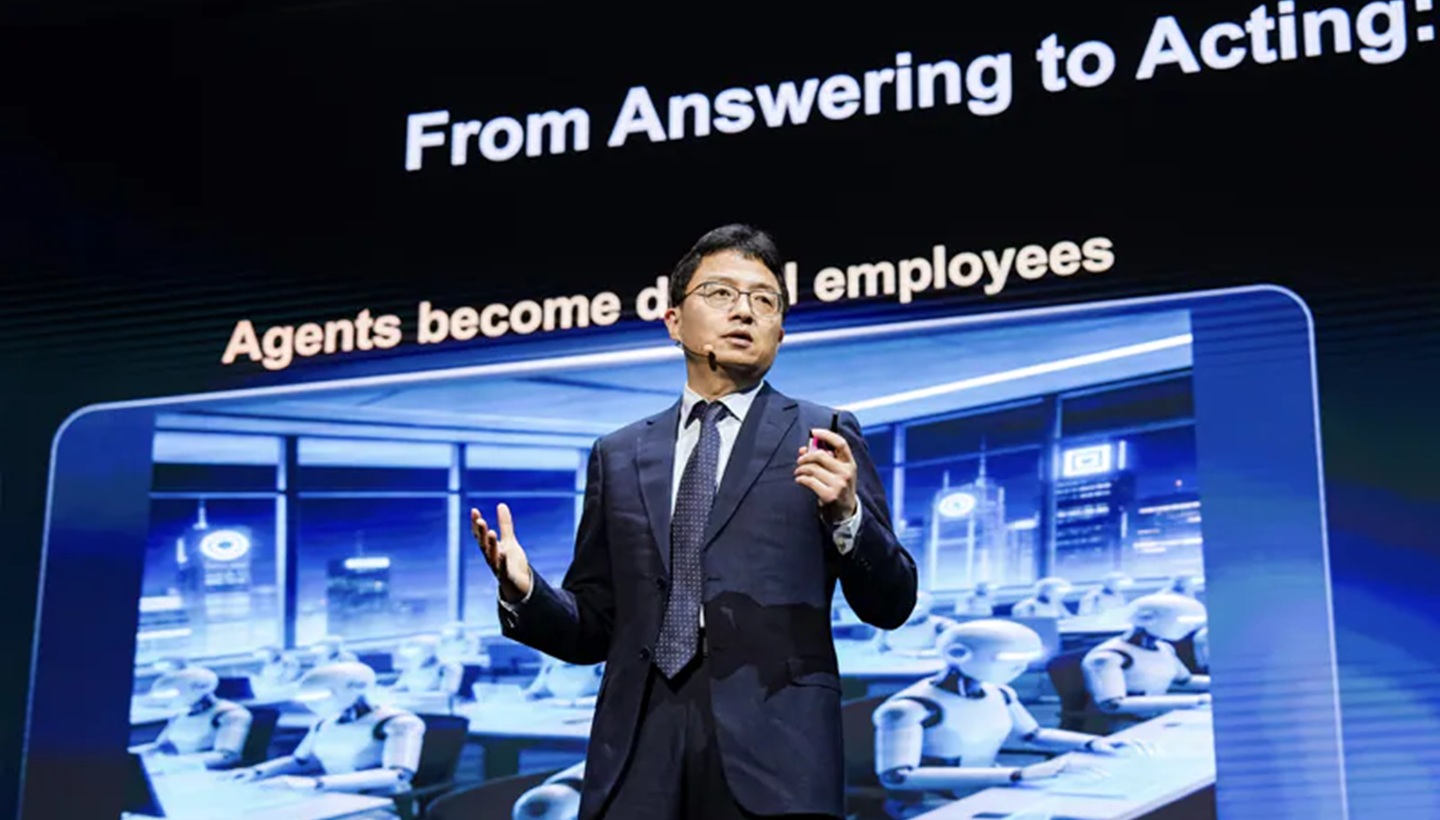
The announcement was made by Huawei vice president and data storage product line president Yuan Yuan, during the Huawei Innovative Data Infrastructure (IDI) Forum 2026 in Paris.

Access deeper industry intelligence
Experience unmatched clarity with a single platform that combines unique data, AI, and human expertise.
The new solution addresses the accelerated adoption of AI tools and the associated increase in enterprise data management needs.
Yuan stated that organisations require a shift from existing IT systems towards dedicated AI data centre (DC) infrastructure to manage rising token consumption and to address challenges in deploying AI across operations.
He identified data lakes, AI data platforms, computing resources, models, agent frameworks, and data resilience as necessary components for establishing data centre infrastructure.
One element of the solution is the OceanStor Pacific Scale-Out Storage, which provides 11 petabytes of storage capacity within a 2U footprint.
According to Huawei, this storage offering aims to keep the total cost of ownership low while accommodating expanding data requirements.
The DME Omni-Dataverse platform, the company’s unified data space solution, has capabilities such as cross-site and real-time data import, global data management, and the ability to retrieve information from large vector datasets.
The company has also introduced context memory storage (CMS) for ultra-scale inference clusters, which supports different types of computing and enables the formation of a shared, petabyte-scale cache pool.
Huawei claims CMS can reduce the time required to generate the first AI token by 90%. The integrated 3+1 AI data platform brings together KV cache acceleration, a retrieval knowledge base with stated over 95% accuracy, and a progressive memory module.
The company’s Unified Cache Manager (UCM) oversees scheduling and management, with reported improvements in inference accuracy of 30%.
Huawei’s ModelEngine supports immediate onboarding and deployment of new AI models, featuring partitioned computing to improve resource efficiency.
The ModelEngine Nexent agent platform facilitates agent creation using natural language input and is designed to shorten operational rollout times.
The infrastructure solution also incorporates a focus on data protection, with end-to-end security intended to prevent risks such as misuse, data tampering, and ransomware threats.
Yuan said: “AI is unlocking new opportunities for the IT industry. The next chapter of AI is data. Committed to technological innovation in data storage, Huawei will accumulate the experience of industrial AI adoption, and work closely with the entire industry to help customers accelerate their journey into the intelligent era.”