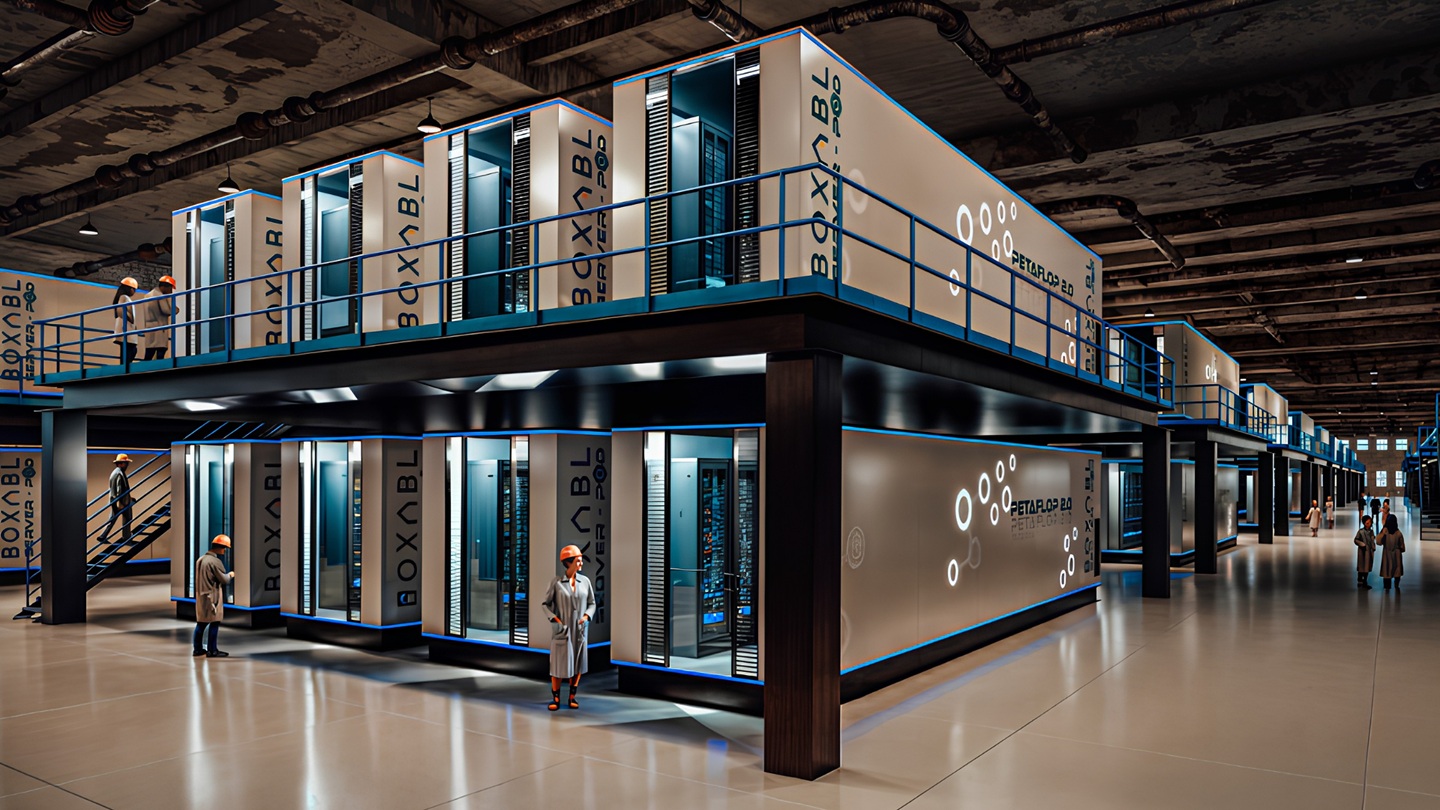
BOXABL has introduced its Server Pod concept, a design study for modular enclosures aiming to demonstrate how its factory-based construction methods could be applied to data centre infrastructure.
The company, which specialises in factory-built structures, has not started manufacturing the Server Pods.

Access deeper industry intelligence
Experience unmatched clarity with a single platform that combines unique data, AI, and human expertise.
Instead, it is seeking engagement from data centre developers, operators, and equipment vendors to design and build custom modular enclosures for AI and cloud computing projects.
Citing JLL’s 2026 Global Data Center Market Outlook, BOXABL noted that the global sector is projected to expand at a 14% compound annual growth rate through 2030, with approximately 100GW of new capacity expected between 2026 and 2030.
JLL has forecast up to $3tn in investment will be needed to meet this demand, including $1.2tn in real estate asset value and a further $1tn to $2tn in tenant spending on technical fitouts.
BOXABL co-CEO Paolo Tiramani said: “The data centre industry needs to build faster than it currently can, and we think our factory can help. Construction costs are climbing and grid connection queues are years long, right when the world needs capacity faster than ever.
“We built BOXABL to take housing off the job site and onto an assembly line. The Server Pod concept is our way of showing the industry what that same approach could look like for compute infrastructure.
“We are not selling Server Pods today — we are inviting companies to bring us their data centre problems and partner to design and build a custom solution.”
The Server Pod design study includes several conceptual configurations, ranging from compact edge enclosures to campus-scale enterprise units.
The specifications are illustrative and not final product designs, with precise details to be established in collaboration with customers.
Each pod, as described in the concept, would leave the factory with integrated racks and pre-installed cabling, built on a pallet frame for rapid deployment.
Final engineering and site conditions would be addressed on a project-by-project basis, with adaptation for factors such as wind, seismic and flood risk, as well as required regulatory approvals.