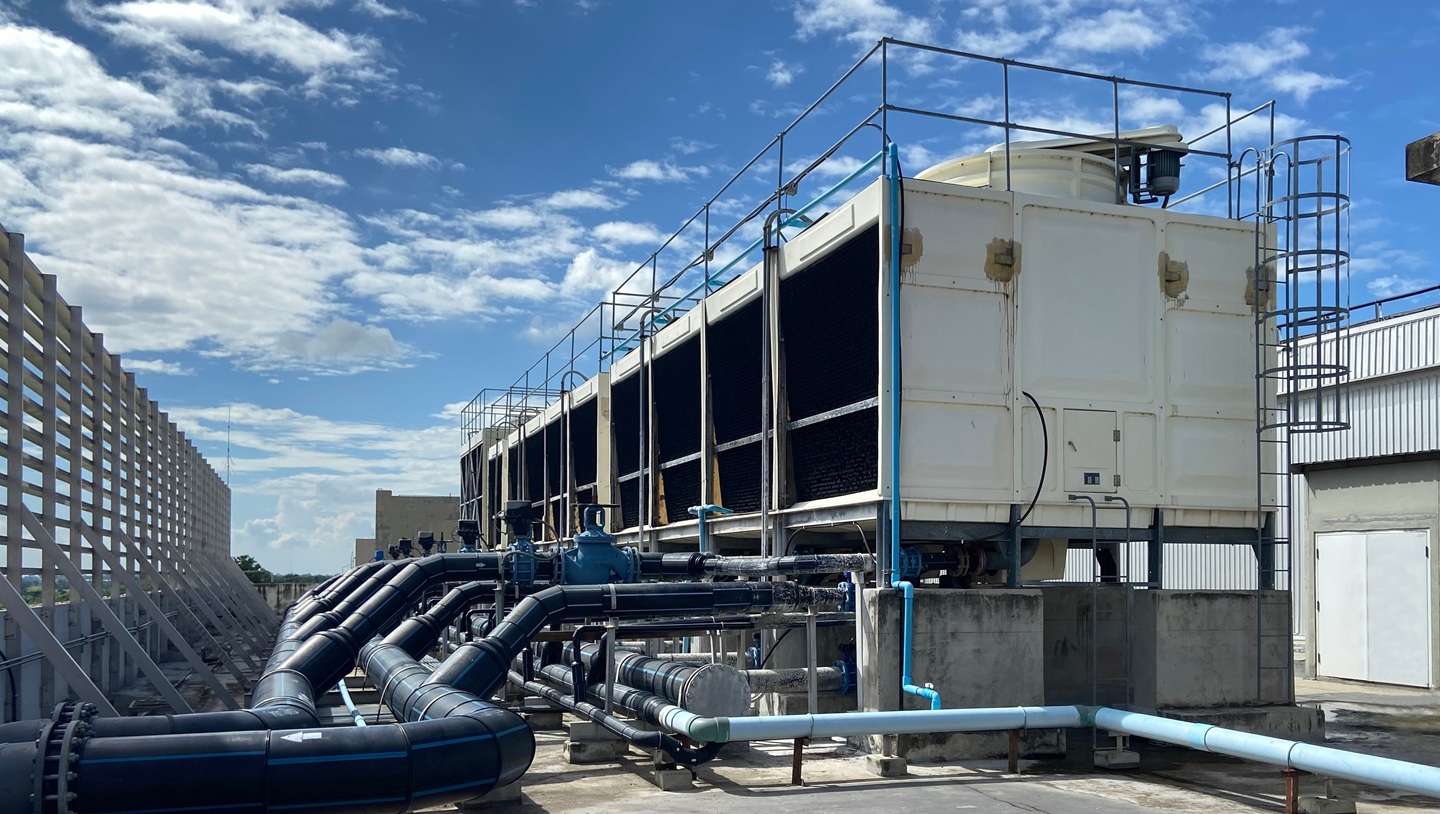
Trane Technologies has unveiled a new magnetic bearing centrifugal chiller, the HSWE, designed for data centre cooling applications in the Asia Pacific region.
The announcement was made as the company aims to address growing demand for cooling systems suited to data centres and other environments with high performance requirements.

Access deeper industry intelligence
Experience unmatched clarity with a single platform that combines unique data, AI, and human expertise.
Trane Technologies Asia Pacific engineering and technology vice-president Bruce Zhongping Gu said: “The launch of the HSWE marks an important milestone for Trane Technologies in Asia Pacific, marking a critical leap from technology localisation to independent, ground-up innovation.
“As our first independently developed water-cooled magnetic bearing technology platform, the HSWE was created specifically to address the evolving needs of customers in Asia Pacific, including the extreme performance demands of modern data centres.”
The HSWE chiller features advanced compressor technology and a newly designed heat exchanger.
The unit achieves a full-load coefficient of performance (COP) of up to 7.3 under the China GB standard and an air-conditioning, heating, and refrigeration institute integrated part load value (AHRI IPLV) of up to 12.3.
This chiller is prepared for use with next-generation hydrofluoroolefin (HFO) refrigerants, supporting compliance with upcoming sustainability and regulatory requirements in Asia Pacific.
Its operational noise levels can be as low as 73 dB(A), allowing installation in noise-sensitive settings such as hospitals and commercial buildings.
For data centre cooling, the HSWE is available in standard capacities ranging from 500 to 1,250 refrigeration tonnes (RT) and can reach more than 1,500RT for specific data centre applications.
It supports chilled water output up to 35°C, integrating with various economiser and free cooling systems.
The chiller can restart within 25 seconds of power restoration and reach full load within two minutes, which may help minimise service disruption.
The model uses the AdaptiView controller, combining adaptive control logic and variable flow compensation to maintain stable operation under fluctuating loads and flow conditions.